
A boot maker first
Wolverine began in Rockford, Michigan, as a tannery and boot shop, and it has stayed with leather work boots for well over a century. The line today runs from classic six-inch lace-ups to pull-on Wellington styles and lighter work shoes built on athletic-style soles. What ties them together is a leather upper meant to take daily wear and a sole built for long days on hard ground.
Features you will see on the tags
Work boot tags are crowded with terms. Here is what the common ones mean:
- Safety toe: a protective cap in steel or a lighter composite material, tested to ASTM F2413. See safety toe in our glossary.
- Soft toe: the same boot with no cap, for jobs that do not require one.
- Waterproof: a membrane or treated leather that keeps water out. See waterproof work boots.
- EH: electrical hazard construction.
- Slip resistant and oil resistant: two separate properties of the outsole.
- Welt construction: the sole is stitched to the upper through a strip of leather, a traditional method that makes a sturdy boot.
Six-inch, eight-inch or pull-on?
Height is about ankle coverage and what is on the ground. A six-inch boot covers the ankle and suits most trades. An eight-inch boot adds support and protection for rough ground and brush. A pull-on is quick on and off and has no laces to snag or soak, though it has to fit the instep exactly, since nothing tightens. We will have you try the heights that suit your work and walk in each.
The fit that lasts a shift
A leather boot breaks in across the top and at the flex point. It does not get longer, and a safety cap does not get wider. So we fit for length and width first:
- Both feet measured, standing, in your work socks.
- A thumb's width beyond your longest toe, with the toes clear of the cap.
- The ball of your foot at the widest part of the boot, so it flexes where you do.
- A little heel lift in a new boot is normal. Rubbing is not.
Read how work boots should fit before you come if you like to be prepared.
Insoles and orthotics for work boots
Most work boots have a removable insole. Concrete does not give, so a supportive insole is one of the best upgrades for a boot worn eight to twelve hours a day. We fit arch supports and orthotic insoles in the store, inside the boot you will wear them in, and the consultation is free.
Buying boots for work in Reno
Construction, electrical work, landscaping and equipment yards keep a lot of boots busy in this part of Nevada. Bring your employer's footwear rule if there is one. Shoes for your job? See work and safety footwear.
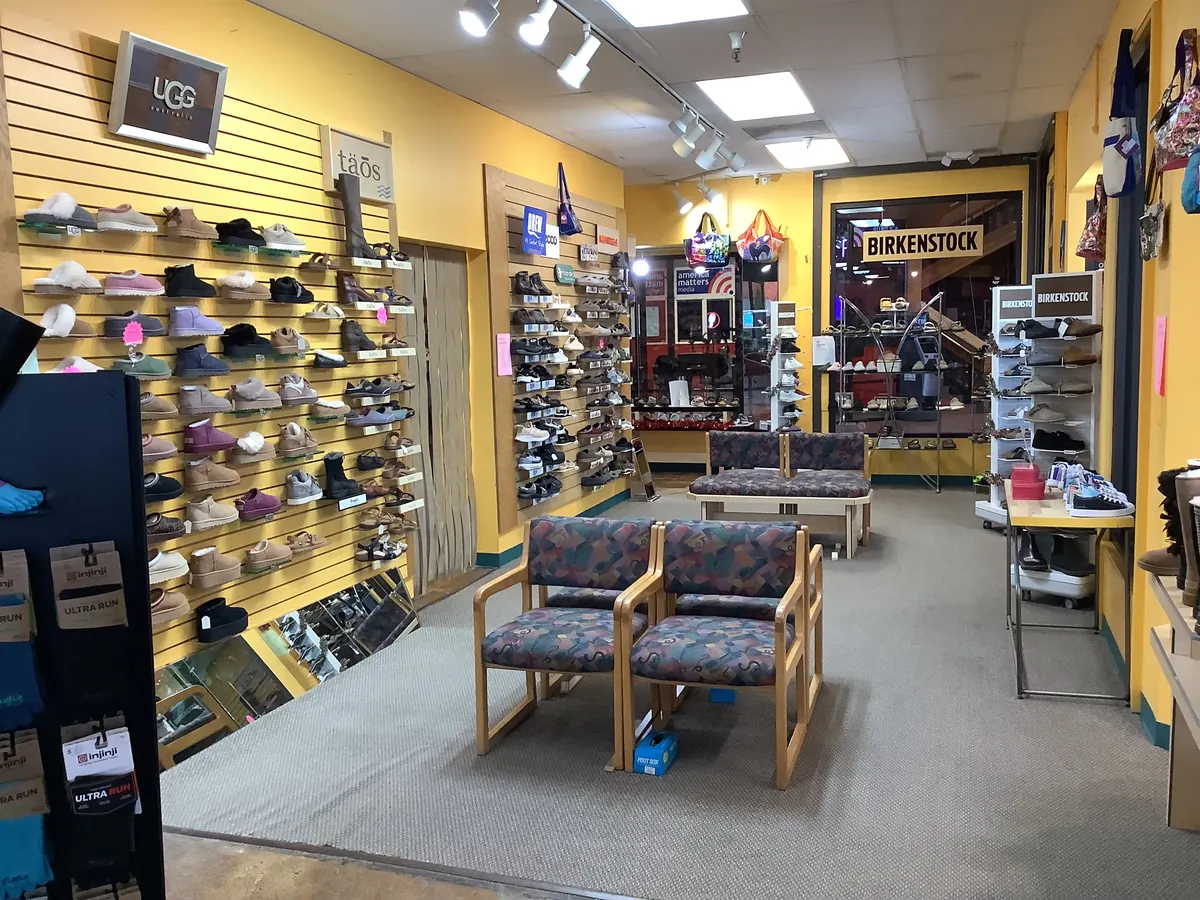
A Proper Fit is inside Reno Town Mall at 4001 S Virginia St, open Monday to Saturday from 10 am to 6 pm. The store carries more than our online work and safety section shows. Call (775) 323-3757 and we will check your size and width.
Questions people ask
How often should work boots be replaced?
It depends on the job and the hours. Worn-through tread, a crushed midsole, a cracked upper or an exposed toe cap are signs it is time. Our replacement guide has a checklist.
Do Wolverine boots come in wide?
The maker offers wide and extra wide widths in selected styles. Call us and we will check what is in the store.
Should I buy work boots a half size bigger?
Buy the size that fits with your work socks on. Extra length puts the flex point and the toe cap in the wrong place.
Is a composite toe as strong as a steel toe?
Both must pass the same ASTM F2413 impact and compression tests to carry the rating. They differ in weight and in how they conduct cold.