
How the two jobs fit together
Our trade has a saying for this. It is a team approach: the doctor looks after the foot, and the C. Ped addresses the footwear. Your provider examines, diagnoses and decides on care. A pedorthist takes that direction and turns it into shoes, supports and adjustments that fit.
So we will not second-guess what your doctor said. We will ask what they said, and then we will find footwear that matches it.
What to bring
- Any written note or recommendation. Even a line on a visit summary helps. "Extra depth." "Rocker sole." "Lift, left side." "Wide toe box."
- The shoes you wear most. The wear pattern on the sole and the shape of the upper tell us a lot.
- Orthotics, inserts or braces you already have, including ones that have not been comfortable.
- Your usual socks, or compression socks if you wear them.
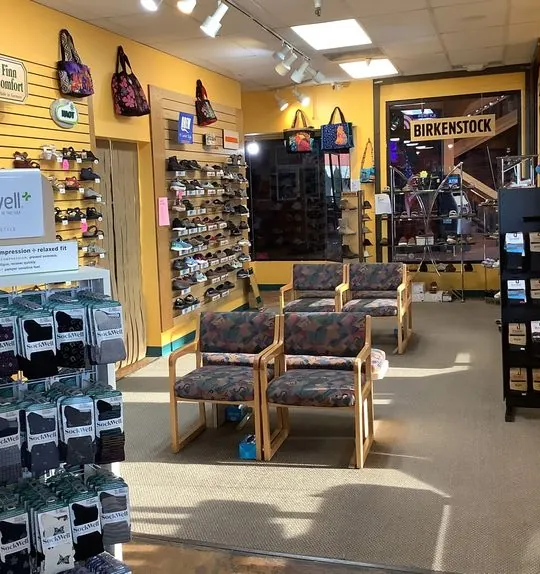
- Someone to come along, if that makes the visit easier. There is seating, and nobody is rushed.
If you forgot the note, come anyway. Tell us what you remember and we can start with a measurement.
Terms your provider may have used
Medical offices and shoe stores share some vocabulary. Here is what a few common phrases mean on our side of the counter:
- Extra depth. A shoe with more room from top to bottom. See depth shoe.
- Rocker sole. A sole curved at the toe, the heel or both so the shoe rolls forward. See rocker sole.
- Firm heel counter. A stiff cup at the back of the shoe that steadies the heel.
- Removable footbed. The insole lifts out so an orthotic can go in.
- Lift or wedge. Height or an angle added to a shoe. We do these modifications in house.
What happens at the visit
We read the note, measure both feet and look at your current shoes. Then a fitter brings footwear with the features your provider named, in your size and width, and checks each one on your foot. If supports are part of the plan, we fit arch supports or talk about custom orthotics at the same time, inside the shoe.
A consultation with our Certified Pedorthist or a member of his trained staff is free.
When to go back to the doctor first
Some things need a medical visit before a shoe store. Please see your doctor or podiatrist first if you have an open sore or blister that is not healing, new numbness or tingling, sudden swelling or pain, or any foot concern related to diabetes. Then bring us what they tell you.
Paying for footwear
Coverage rules for footwear and supports vary by plan and program. Your plan administrator or your provider's office can tell you what applies to you, and our guides on Medicare and diabetic shoes and HSA and FSA accounts explain how those programs work in general.
Our store is inside Reno Town Mall at 4001 S Virginia St, across from the Atlantis, open Monday to Saturday from 10 am to 6 pm. Phone (775) 323-3757.
Questions people ask
Do I need a written referral to come in?
You can walk in with or without one. A note from your provider simply helps us match the footwear to what they want for you.
My podiatrist said "get fitted properly." What does that involve?
Both feet measured standing, shoes brought to you in the right size and width, and each pair checked on your foot by a trained fitter. Our page on what happens at a fitting goes step by step.
Can I bring orthotics that my doctor's office made?
Please do. We fit shoes around them, and we can show you styles with the depth and removable footbeds they need.
Will you talk with my doctor's office?
Bring whatever they gave you in writing and we will work from it. If a question comes up that only your provider can answer, we will tell you what to ask them.